Foundation Paper Piecing Tips and Supplies

I’ve been posting most of my quilting and hiking projects over on Instagram, but I want to blog a bit more this year.

This past year, I did quite a bit of both foundation paper piecing and applique quilts. I love the precision of foundation paper piecing and the crisp edges that it gives. I recently completed a quilt along using this technique and will blog about it over the next few posts. I’ll also talk about my applique quilts and the wonderful experience that I had as an artist-in-residence last fall.

I’ve heard from some quilters who want to know about the tools that I use for foundation paper piecing so this post will focus on that topic. I do have a page on my blog that lists all of my favorite tools so you can amend your toolkit with these items. I use each tool to achieve foundation paper piecing perfection!
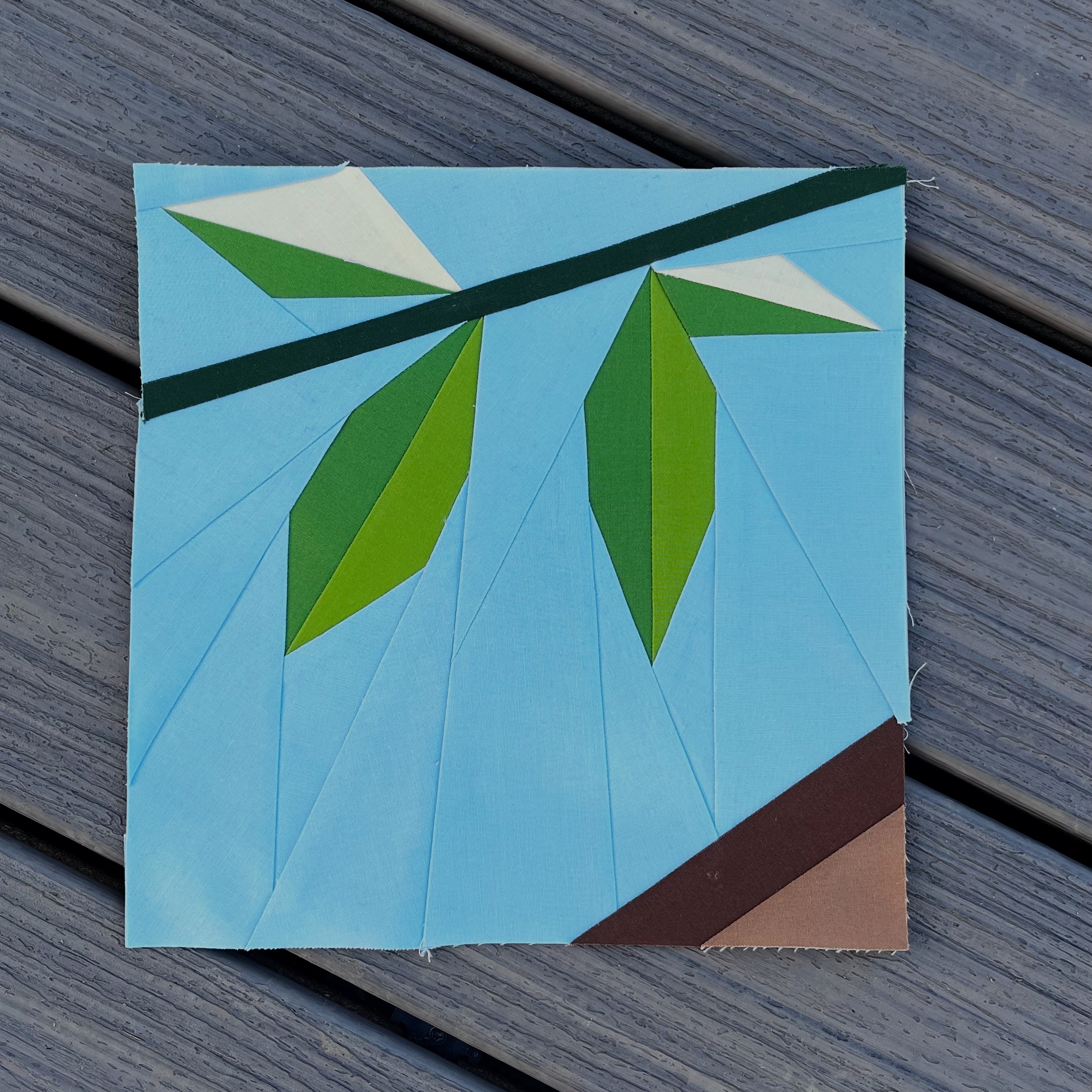
The foundation paper piecing technique creates crisp edges!

Foundation Paper Piecing Method

I use the TSP technique for foundation paper piecing, which I learned many years ago from Carol Doak. What is that, you may wonder? It stands for trim, stitch, and press. Essentially, I trim the seam with my add-a-quarter ruler, stitch the next seam using a 1.5″ stitch length, and then press that seam. And repeat!

Foundation Paper Piecing Tools

I use both a 6″ add-a-quarter ruler and a 12″ add-a-quarter ruler, depending on the size of my fabric pieces. I tape these rulers to a postcard to create a sort of flipping mechanism to align my foundation just right. I flip the ruler up, lay the postcard against the seam on the foundation, fold it back, and then trim the fabric underneath. You can get into a nice rhythm using this method, which makes foundation paper piecing a relaxing experience. I may do a little video of myself doing this method in a future post so you can visualize it better.

For the first piece of fabric, I use a little bit of roller adhesive tape rather than glue or pins. I find that glue hardens and makes a terrible little nub in your project, and pins tend to be too big for my small foundations. Remember to place your initial piece of fabric wrong side down. It’s the only piece that gets applied wrong side down! For the remaining pieces of fabric in your foundation, you’ll place the fabric right sides together.

I prefer to use a smaller rotary cutter for foundation paper piecing. My preferred size is a 28mm rotary cutter. For me, the 45mm rotary cutters are too large, although I do use them for cutting sashing, borders, or larger pieces of fabric.

When I do foundation paper piecing, I have a little cutting mat, a small wool pressing mat, and a mini iron next on a little table to me so I don’t have to get up for each step. For larger seams or when the block is complete, I will move to my big iron for pressing. However, I find having my little press and trim station next to my machine helps me to be very efficient at foundation paper piecing.

You can also use this method to chain piece foundations. Yes, you heard it correctly! You can chain piece while doing foundation paper piecing. I usually only chain piece when I’m making similar blocks. If the blocks are very different, then I do them individually so that I don’t get too confused.

If you found these tips and supplies helpful, give me a comment! Would you like to see little videos or pictures of these tips in future posts?

Happy quilting!

Jen
Meep, meep!

Last October, my husband and I traveled to New Mexico to see the Balloon Fiesta in Albuquerque and to do some hiking at various national and local parks. I did manage to squeeze in visits to a couple of local quilt stores and purchased a couple of fun patterns.

I hoped to see a roadrunner during our visit, but, sadly, didn’t see one. I’ve only seen a roadrunner once in person on a visit to Cathedral Gorge State Park in Nevada several years ago. I decided to buy a little roadrunner quilt block called Marigold from Stitchology, a cute modern quilt shop in Albuquerque.

This block is 12″ and is a combination of traditional piecing and applique.

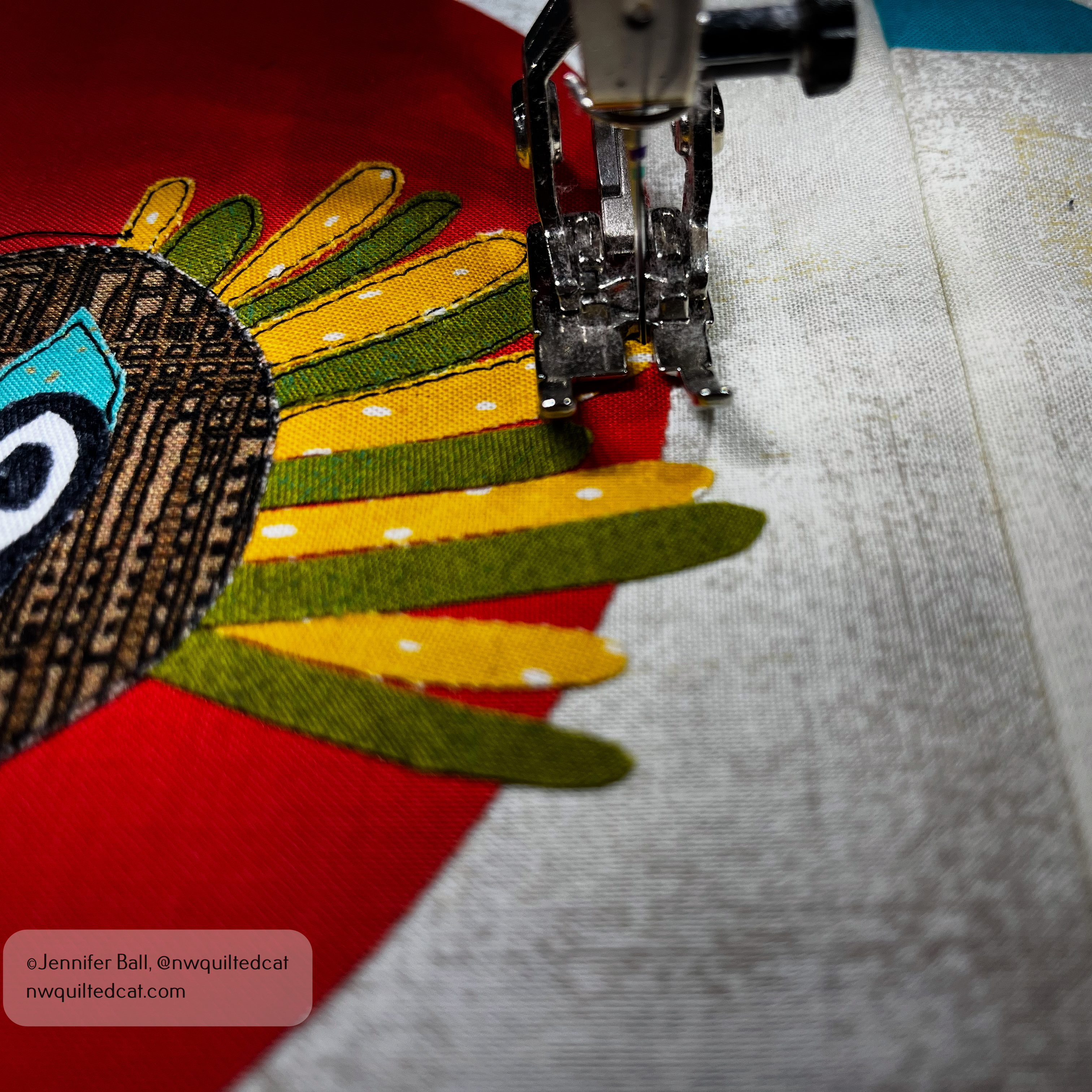
Here’s a close-up look at the applique feathers on the bird’s head:

Applique stitches

I decided to finish this quilt block as a mini quilt to commemorate my visit to New Mexico. It’s quite a different bird than what we have here in the PNW!

I added a turquoise inner border with some decorative stitches. For the outer border, I used this fun roadrunner print designed by a textile artist in ABQ. She has a store front in old town called Desert Bird Mercantile where you can purchase her prints as fat quarters or by the yard.

Completed Marigold the roadrunner mini quilt

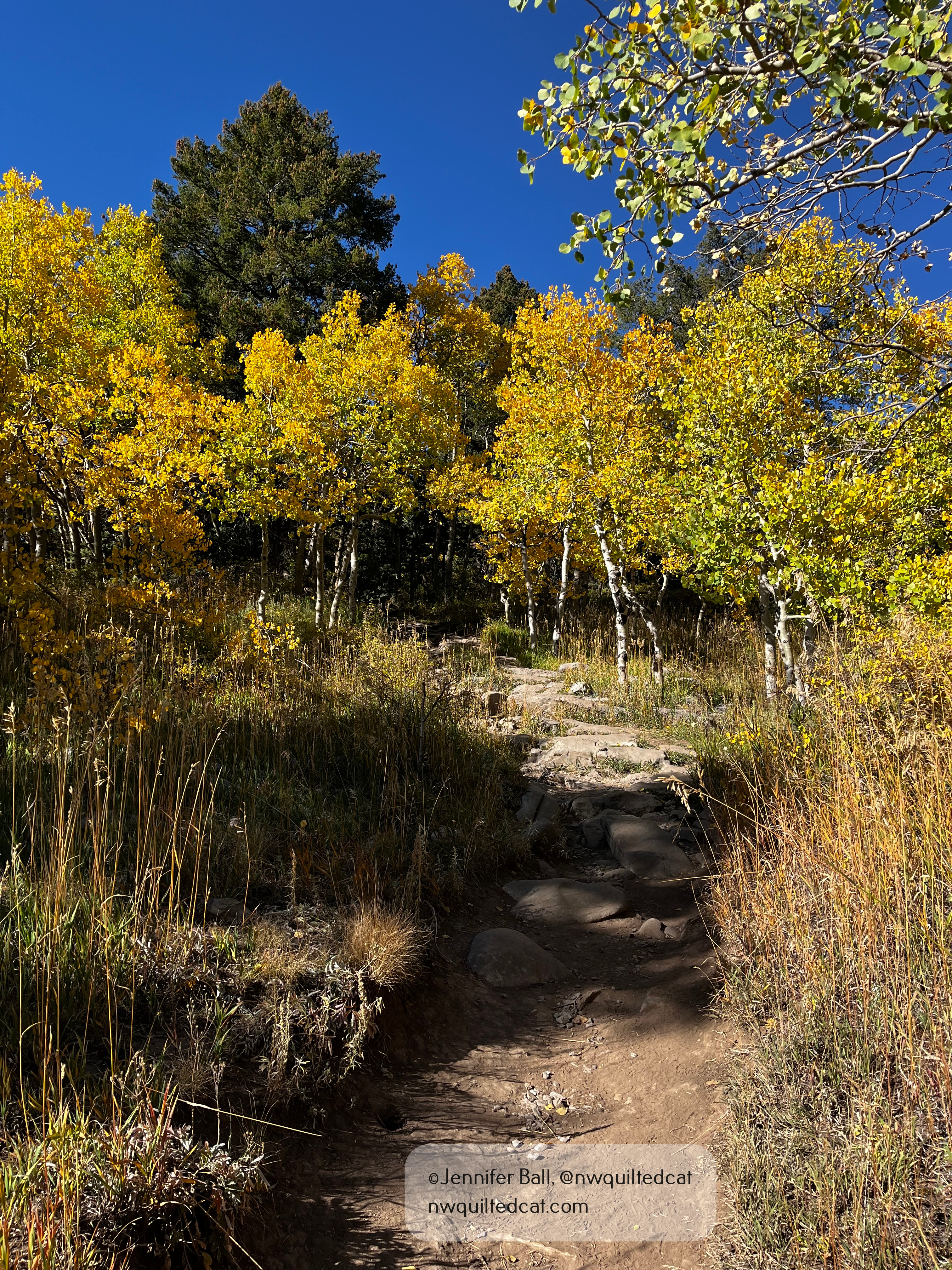
The next day, we took the tram up to Sandia Peak for some hiking. We did about 8 miles along various trails. It was a gorgeous day and the aspens were in their fall glory!

Beautiful aspens in fall color

Here’s a stunning viewpoint from the top overlooking Albuquerque below. We had a little picnic lunch here while admiring the views.

Lunch time view looking down at Albuquerque

I’ll post some pictures of our hiking adventures from the trip in future posts. I love checking out hikes whenever we travel!

Happy quilting,

Jen

Meowville Finished Quilt

Last year, I completed work on my epic tiny house quilt. I started this quilt in 2023 as a weekly sew along with tiny 6″ foundation paper-pieced houses by Quilt Art Design.

When I last shared my progress, I was about 2/3 finished with the quilting. My goal was to finish this quilt so I could display it at the Sisters Outdoor Quilt Show last July. I realized that I never shared my finished quilt!

My husband and I hike and backpack regularly so I decided to take a picture of the final quilt at the start of a fantastic trail in the Columbia River Gorge called Eagle Creek.

Here’s a look at the finished quilt with all the beautiful greens from the moss and vegetation:

Meowville Finished Quilt at Eagle Creek

If you’ve never hiked along the Eagle Creek trail, I highly recommend it. One of the picturesque falls that is easily doable for most hikers is called Punchbowl Falls. It’s about a 5-mile round trip hike. It does have a few sections with steep drops so be cautious, especially with children and dogs.

I have hiked all the way to the top to Wahtum lake when I was a teenager, which requires either a car shuttle or backpacking. On this particular trip with my quilt, we decided to do a long day hike. We had lunch at Twister Falls and turned around at that point. Tunnel Falls is approximately a 12 mile round trip hike with Twister being about 1/2 mile beyond. If you do hike to Twister, there is a very steep drop often called the “Vertigo Mile” that might be challenging if you’re afraid of heights. There are cables attached to the rock to help you navigate that section if you need them.

Tunnel Falls at Eagle Creek
Twister Falls at Eagle Creek
A Section of the “Vertigo Mile,” the approach to Twister Falls along the Eagle Creek trail with my hubby and dog.

We hiked this in April 2024 so the waterfalls were flush with water. So beautiful!

I did enter Meowville into the Sisters Outdoor Quilt Show so if you visited in July 2024, you might have seen it.

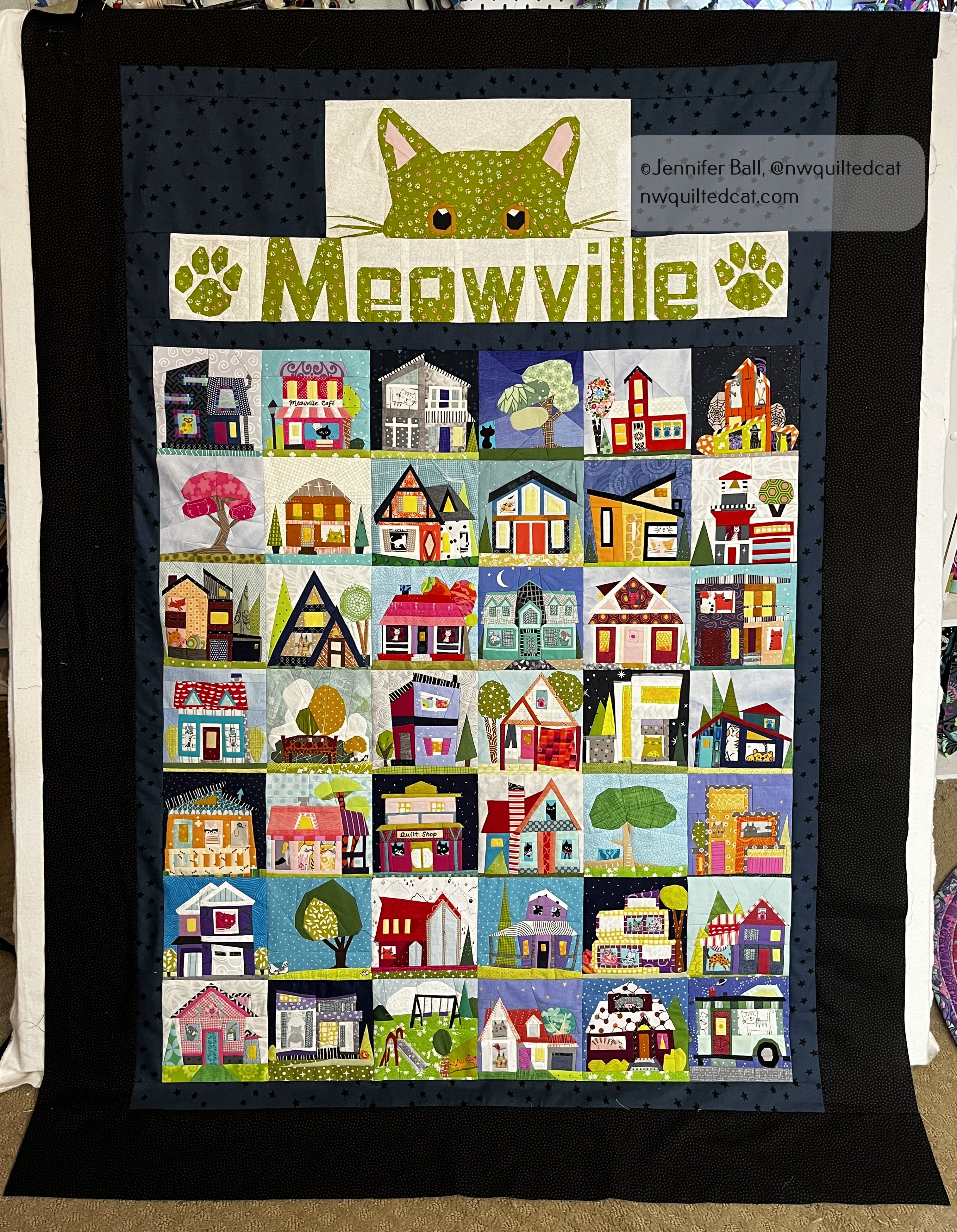
Here’s a look:

Meowville at the Sisters Outdoor Quilt Show, July 2024

Each of those house blocks has a cat or two pieced into it. If you zoom in on the picture, see if you can find all of the cats. There are some really tiny pieces! I really enjoyed creating this quilt, and sewing one tiny house each week for 36 weeks.

Let me know in the comments if you saw my quilt at the show!

Happy quilting,

Jen

Vintage Christmas Quilt Along, Month One Blocks

Hi everyone,

In my previous post, I talked about the new Vintage Christmas quilt along hosted by Fat Quarter Shop. This quilt along lasts 12 months and features blocks from Lori Holt’s book, Vintage Christmas. Each month, we’ll sew 4 blocks and you can join at any time!

Let’s take a look at my remaining three blocks from January (see my earlier post for details on the first block).

Candy Canes block

Vintage Christmas Quilt Along, Block 2, Candy Canes

This block came together pretty quickly. If you’re using directional fabrics, be careful how you place the reds/pinks and whites so they are all facing the same direction.

Candy Swirl Block

Vintage Christmas Quilt Along, Block 3, Candy Swirls

This block was the easiest to sew this month. Again, watch your directional fabrics if you want them to face the same direction. In this block, I kept the directional fabric going vertical for the outer ring. For the darker reds in the middle, I made two of the half-square triangles with the print oriented vertically and the other two with the print oriented horizontally.

Christmas Candles Block

Vintage Christmas Quilt Along, Block 4, Christmas Candles

This block has some very tiny 3/4″ pieces! The are situated in the candle flames and in the greenery at the bottom. These small pieces are challenging so go slow. If I were to make this block again, I think that I’d foundation paper-piece those sections (by drawing my own pattern based on the block).

Vintage Christmas Quilt Along, First Four Blocks

Vintage Christmas Quilt Along, First Four Blocks

You’ll notice that three of these blocks have a darker background fabric, and one block has a lighter background fabric. I’m using the kit from Fat Quarter Shop so these blocks will all pop nicely against the sashing when I put the blocks together.

Join me again in February where we’ll make four more blocks! Let me know in the comments if you are quilting along with this BOM. I’d love to see your progress. You can also follow my progress at Instagram at @nwquiltedcat.

Happy quilting!

Jen

A New Year and A New Quilt Along!

Wishing you all a very happy 2025! We started the year off with a short hike through a beautiful forest. The trail contained so many hues of green from the giant sword ferns to the mosses to the trees. The trail was quite muddy from all of our recent rain, but we were fortunate to have cloudy conditions and no rain during our walk.

For 2025, I’m doing a themed quilt along with the Fat Quarter Shop called Vintage Christmas. For this sew along, you’ll need this quilt book by Lori Holt. You can use your own fabrics or you can buy the quilt kit once it is restocked.

Each month, we’ll make 4 blocks, each finishing at 6-inches. The quilt along runs until December so you’ll have a beautiful quilt finished in time for Christmas 2025, assuming you can finish the quilting, ha, ha!

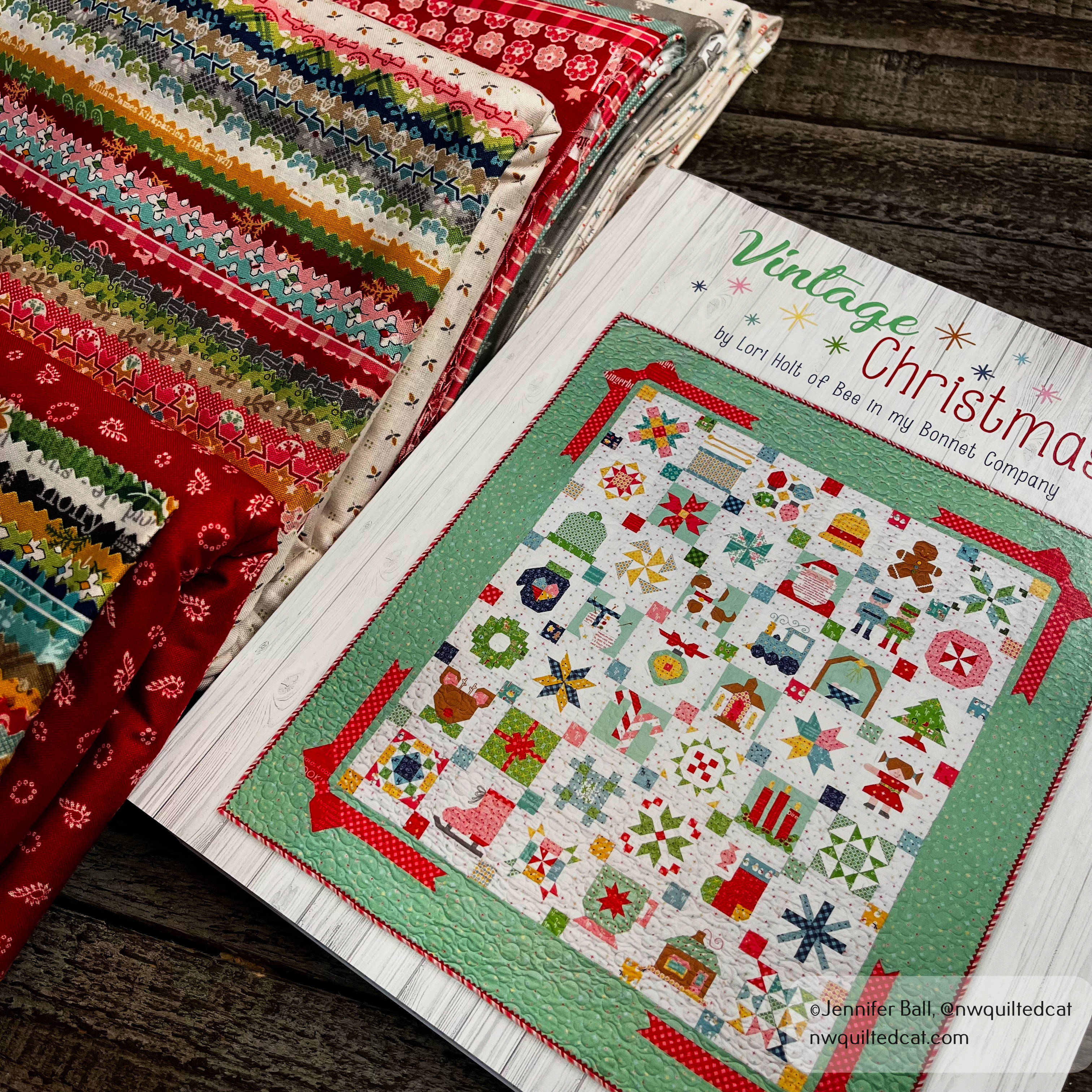
I’m using the quilt kit, and here’s a look at my book with some of the beautiful fabrics.

Vintage Christmas book and fabric kit for the quilt along

I do starch my fabric, usually one block at a time because I don’t have the time or space to starch the entire kit all at once.

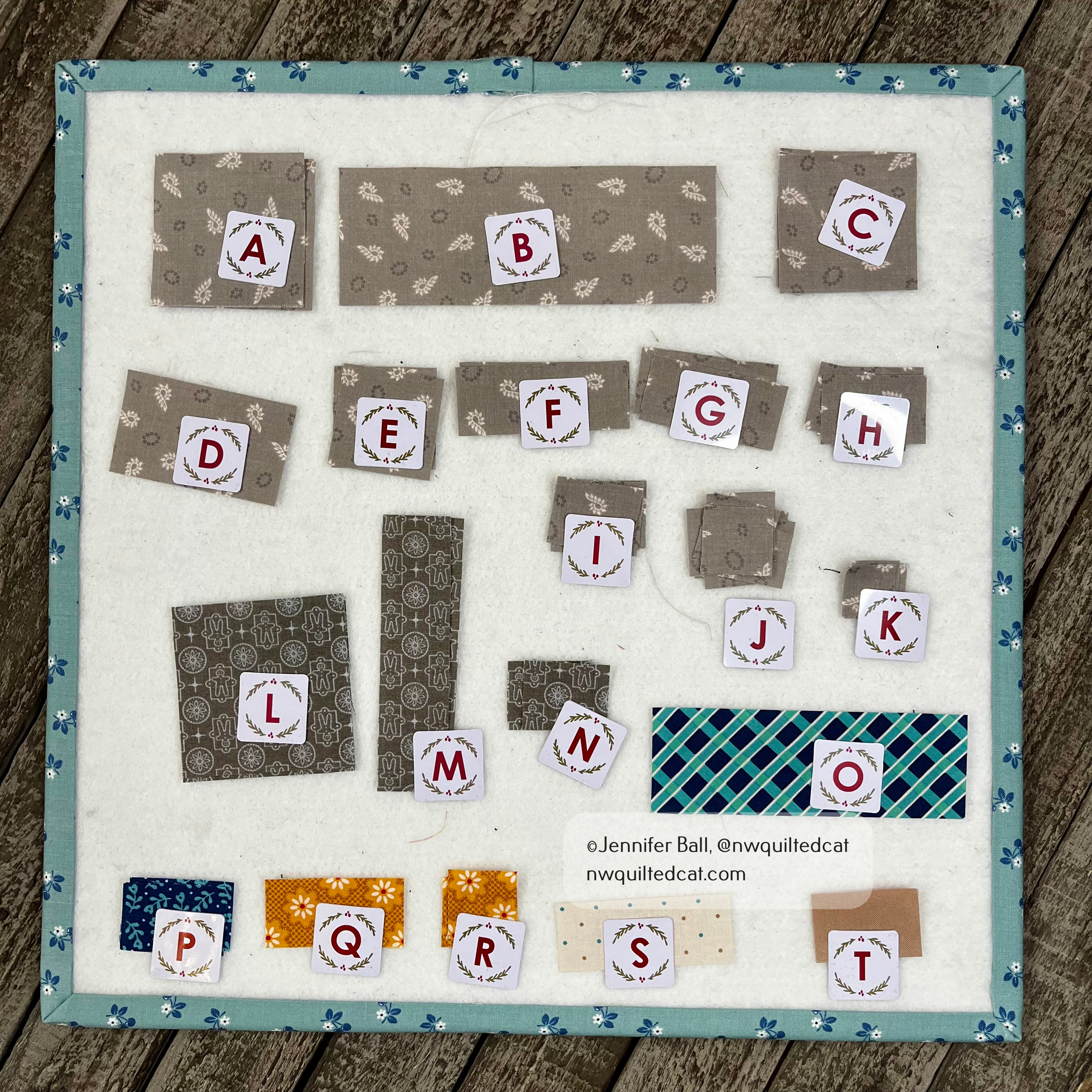
When I work on these smaller 6-inch blocks with many pieces, I like to label them with Alphabitties and place them on little design boards. You can make design boards by using a foam board, batting scraps, and fabric scraps for the binding or purchase them here.

Vintage Christmas block one with Alphabitties on a design board for easier piecing

When sewing these blocks, go slow and careful to maintain accuracy. I do lower my stitch length slightly and backstitch where the pieces will be exposed on the edges. I don’t like to use steam in my iron so I do a final press when a hot, dry iron and Flatter spray. I also use wooden clappers and let the blocks cool completely with the clappers on top.

Here’s a look at block one called “Away in a Manger.”

Away in a Manger block – Vintage Christmas Quilt Along

I hope you’ll join me along in this festive quilt along. I’ll post the other month one quilt blocks this week to inspire you.

Happy quilting!

Jen

Epic Tiny House Paper Pieced Quilt, Part 2

I last blogged in January, but I have been working on various projects to submit to the Sisters Outdoor Quilt Show. I have some quilt tops that have been pieced for a while and need to be quilted plus I wanted to submit some post cards for the annual fundraiser at the show.

For the tiny house project, I had to decide how to piece the top because there is no pattern for the final layout.

I decided that my “Meowville” quilt needed the pieced name to be on the top, but the quilt was still missing something. Hmm, what could I add? How about a giant cat face peeking out at the viewers? I found a great pattern from Quilt Art Design called “Cat Helper” that would fit my idea with a few modifications.

The cat’s eye is always watching!
A partial cat head, perfect for mischievously peering down at the Meowville tiny houses

I now had the final blocks of my quilt assembled and ready to be set into a layout! I thought about a layout for a few weeks, and decided to place my tiny houses in rows without sashing strips. I set the blocks using a fun Ruby Star Society from their Starry line. I used Starry in the Smoke colorway, which is a beautiful deep blue with black stars. Finally, I added an outer border using a black print from my stash to give the quilt a nice frame and to meet the minimum width requirements for the quilt show.

Meowville quilt flimsy

Last weekend, I loaded Meowville onto my frame to start quilting. I’m using Glide thread in Celery in the giant cat head and letters, and using Glide thread in black for the remainder of the quilt. I’m going to keep the quilting very simple to keep the focus on all of those wonderful tiny houses!

Time for quilting!
A cute heart quilted into a paw

I’m about 2/3 of the way finished with the quilting, and I expect to finish this week. I’ll post a picture of the completed quilt soon! I have 2 more quilt tops ready to be quilted for the show so I need to get to it!

Happy quilting,

Jen

Making a 30 minute cuddle blanket

My almost 7-year-old son asked me recently if I could make him a new cuddle blanket for traveling and going to grandma’s house. I agreed. He then gave me very specific requirements: it must be soft and it must have birds on it! So off to the fabric store I went in the hunt for fabric.

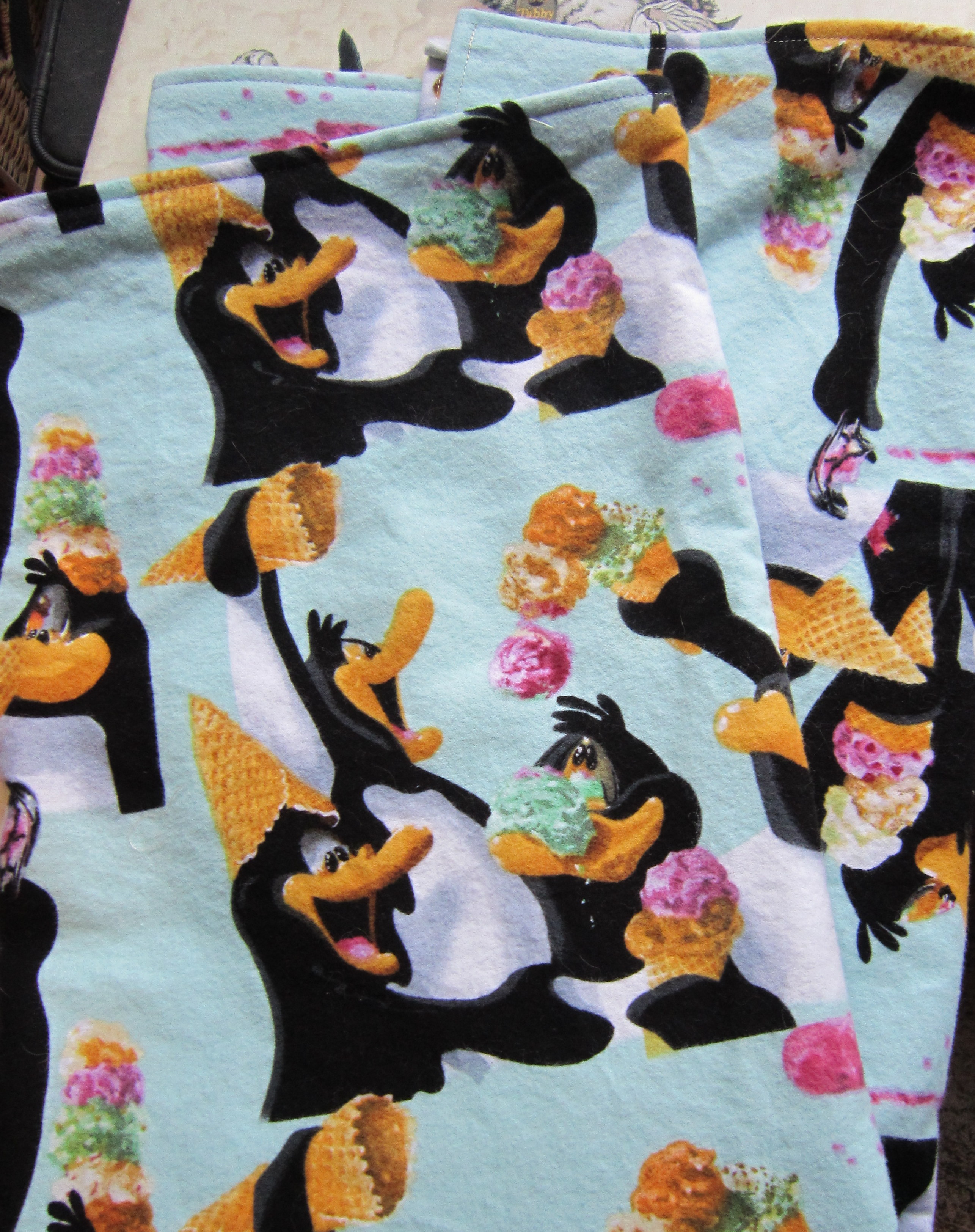
I had a difficult time finding a bird print that wasn’t too babyish or too girly. I knew he wouldn’t want cute little owls on a pink background! As I was searching, I spotted the perfect fabric. It had crazy penguins and ice cream cones and it was a soft flannel.

I purchased one yard and took it home to wash it.

Next, I trimmed off the edges to make it even. I folded each edge in 1/2 inch and then a 1/2 inch again for a nice hem. I pinned it and sewed each edge using a 1/4 inch seam allowance. The whole sewing portion took under 30 minutes!

Here’s what the finished blanket looks like, a bit folded on my ironing table:

Image

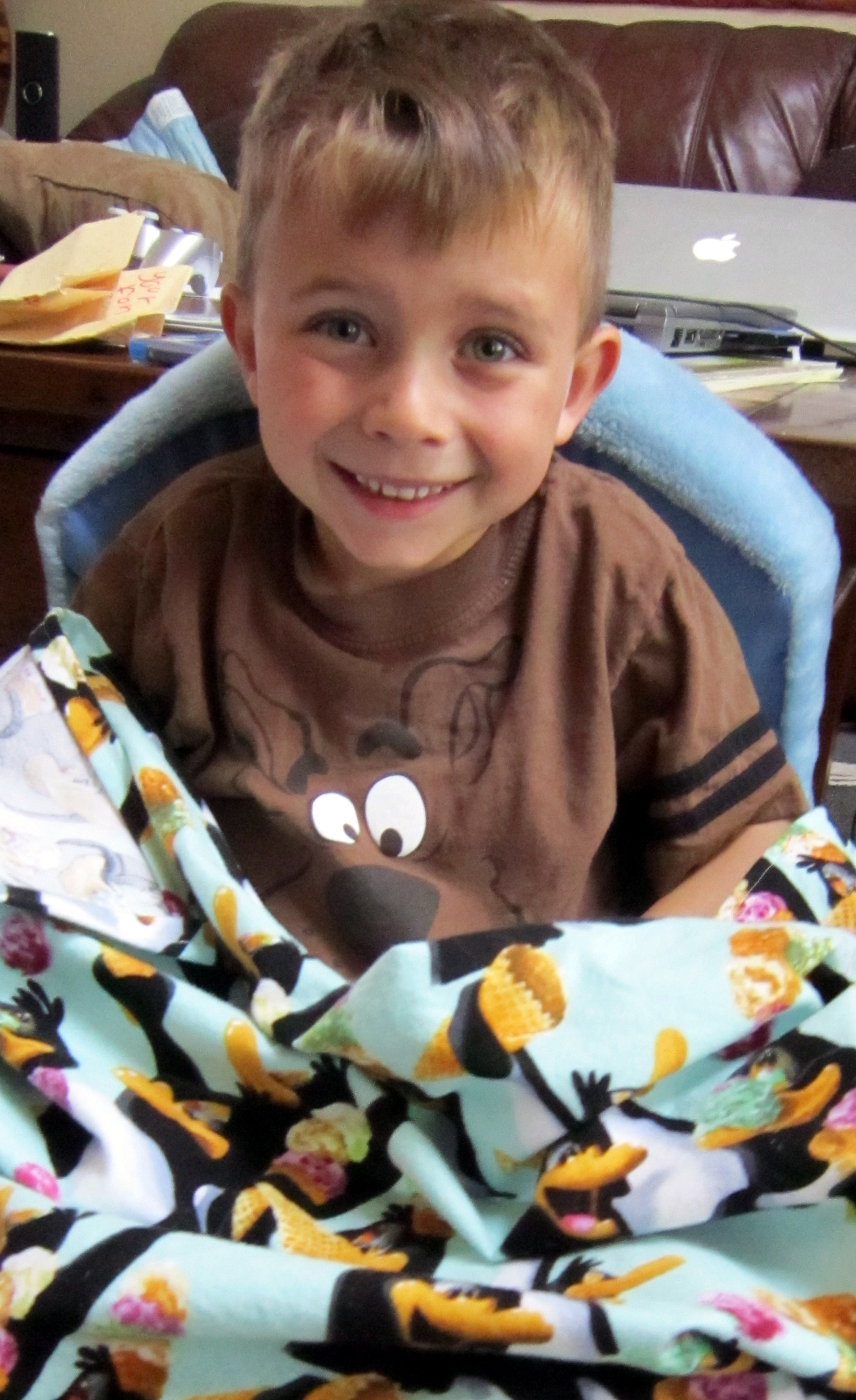
And here’s what it looked like right before grandma arrived:

Image

That’s one happy kid!

I used a print called “Scooping Up a Little Happiness” number S#H4010 by Hoffman Fabrics.

These little blankets make great little gifts for kids!

Happy sewing!

~ Jennifer ~