Foundation Paper Piecing Tips and Supplies

I’ve been posting most of my quilting and hiking projects over on Instagram, but I want to blog a bit more this year.

This past year, I did quite a bit of both foundation paper piecing and applique quilts. I love the precision of foundation paper piecing and the crisp edges that it gives. I recently completed a quilt along using this technique and will blog about it over the next few posts. I’ll also talk about my applique quilts and the wonderful experience that I had as an artist-in-residence last fall.

I’ve heard from some quilters who want to know about the tools that I use for foundation paper piecing so this post will focus on that topic. I do have a page on my blog that lists all of my favorite tools so you can amend your toolkit with these items. I use each tool to achieve foundation paper piecing perfection!
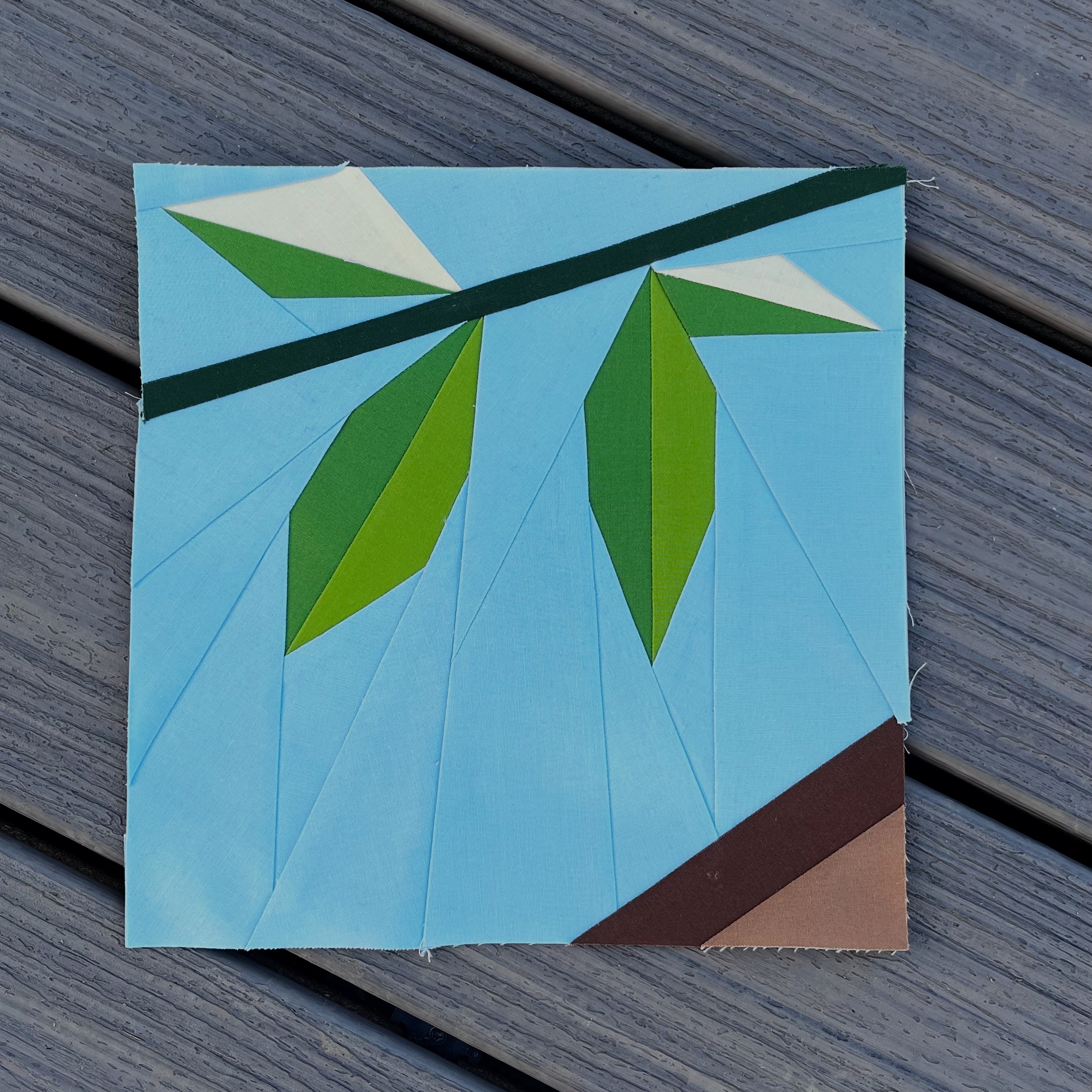
The foundation paper piecing technique creates crisp edges!

Foundation Paper Piecing Method

I use the TSP technique for foundation paper piecing, which I learned many years ago from Carol Doak. What is that, you may wonder? It stands for trim, stitch, and press. Essentially, I trim the seam with my add-a-quarter ruler, stitch the next seam using a 1.5″ stitch length, and then press that seam. And repeat!

Foundation Paper Piecing Tools

I use both a 6″ add-a-quarter ruler and a 12″ add-a-quarter ruler, depending on the size of my fabric pieces. I tape these rulers to a postcard to create a sort of flipping mechanism to align my foundation just right. I flip the ruler up, lay the postcard against the seam on the foundation, fold it back, and then trim the fabric underneath. You can get into a nice rhythm using this method, which makes foundation paper piecing a relaxing experience. I may do a little video of myself doing this method in a future post so you can visualize it better.

For the first piece of fabric, I use a little bit of roller adhesive tape rather than glue or pins. I find that glue hardens and makes a terrible little nub in your project, and pins tend to be too big for my small foundations. Remember to place your initial piece of fabric wrong side down. It’s the only piece that gets applied wrong side down! For the remaining pieces of fabric in your foundation, you’ll place the fabric right sides together.

I prefer to use a smaller rotary cutter for foundation paper piecing. My preferred size is a 28mm rotary cutter. For me, the 45mm rotary cutters are too large, although I do use them for cutting sashing, borders, or larger pieces of fabric.

When I do foundation paper piecing, I have a little cutting mat, a small wool pressing mat, and a mini iron next on a little table to me so I don’t have to get up for each step. For larger seams or when the block is complete, I will move to my big iron for pressing. However, I find having my little press and trim station next to my machine helps me to be very efficient at foundation paper piecing.

You can also use this method to chain piece foundations. Yes, you heard it correctly! You can chain piece while doing foundation paper piecing. I usually only chain piece when I’m making similar blocks. If the blocks are very different, then I do them individually so that I don’t get too confused.

If you found these tips and supplies helpful, give me a comment! Would you like to see little videos or pictures of these tips in future posts?

Happy quilting!

Jen

Making a Fabric Basket (or Tub)

Hi everyone!

Recently, I came across a fun sew along on Instagram where the participants were making fabric baskets, also called tubs. I was intrigued by them, by I knew that I didn’t have time to complete one within the sew along timeframe. I purchased the pattern called “Tub Family” from RosieTaylorCrafts on Etsy, and set it aside for a couple of days.

Then, several weekends ago, I had a few hours to try my hand at making one. The pattern comes with 3 sizes of fabric baskets, and I opted to make the largest one. I have some of the beautiful Homemade fabric by Tula Pink, which I think is absolutely perfect to make all sorts of things for my sewing room.

The pattern walks you through the construction steps pretty well, but I have a few pointers if you decide to make one.

Once you have your main basket panel, liner, and foam all ready for quilting, I do recommend using the straight-line quilting as mentioned in the pattern. I tried doing an all over swirly type quilting on my test basket, but I had a much harder time attaching the bottom and getting the basket to sit properly. It’s just kinda floppy!

On my “real” basket, I did straight-line quilting using a beautiful Aurifil bright green thread with a seam guide on my Bernina. In the picture below, you can see my seam guide helped to give me perfect 1-inch quilting lines.

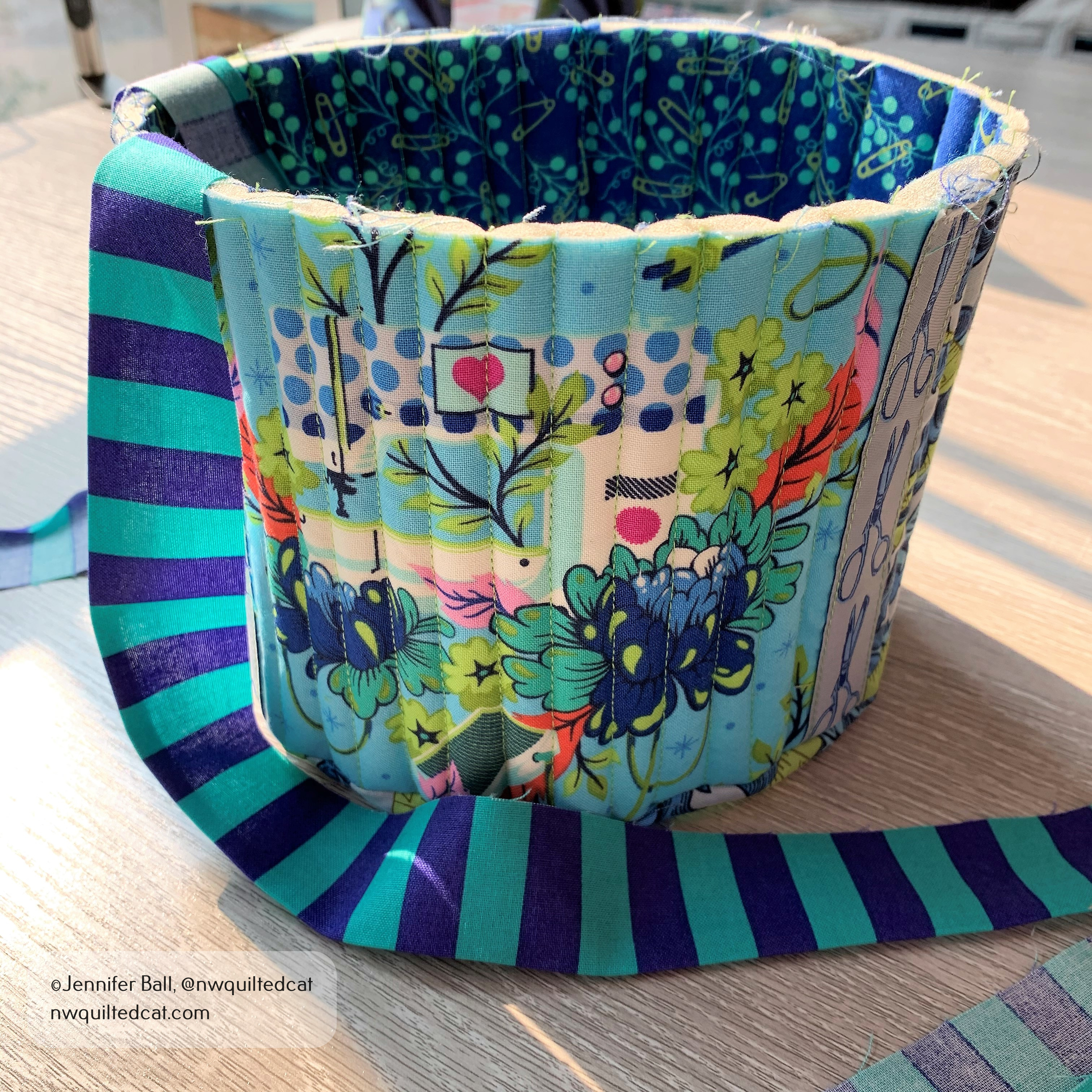
After quilting at 1-inch and .5-inch intervals, I had my finished main panel, ready for my quilt inspector. I used some fun Tula Pink ribbon along either side of the fussy cut sewing machine in the center of the panel. This pattern is so flexible that you could make baskets out of scraps, a single piece of fabric, or several large chunks like I did.

My finished main body panel with quilt inspector

After trimming the main panel to the correct size, I started to attach the base to the body. This step is the hardest part of the whole pattern because the base really needs to be eased in using clips or pins.

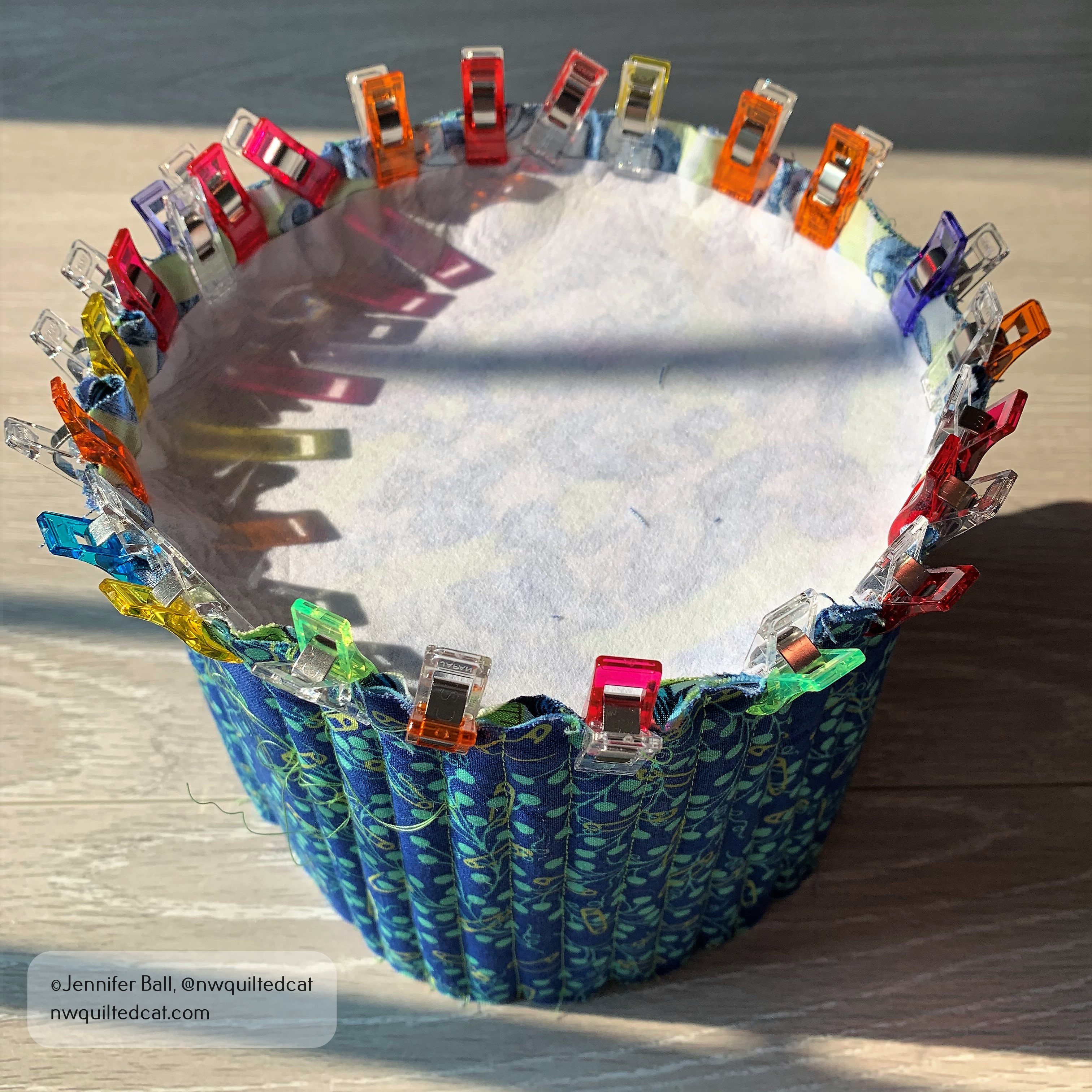
I used Clover clips to secure my base rather than pins. No blood! If the base is still too large after easing it, you may need to trim it down slightly.

Using Clover clips to attach the base

The pattern does have you hand stitch the base to the body before using your sewing machine to help with puckers. I highly recommend doing this step. You can remove the clips after hand basting, and then use your machine to slowly and carefully stitch the base to the body.

I did my binding a bit different from the pattern by pressing one side in 1/4-inch so that I’d have a nice finished edge to work with when sewing the second long edge to the inside of the basket.

Getting the binding ready

I did completely machine stitch my binding rather than hand sewing the inside, just for lack of time. I used the same color thread as the quilting, and I think it looks fine.

Here’s a look at my completed fabric basket, filled with some EPP supplies:

My finished basket!

These baskets are addictive to make, and I want to try making the medium and small sized ones soon. Maybe Christmas themed ones as well!

There are many examples of completed baskets using the #tubfamily hashtag on Instagram.

Enjoy and happy sewing!

-Jen

Aurifil BOM – August

Happy Wednesday, quilty friends!

It’s been a crazy couple of weeks, and I haven’t updated my blog as regularly as I’d like. I’ve been working on several projects with deadlines that are finally completed. Both projects will be in the mail tomorrow. One is a special quilt project for a magazine that I will be able to share with you in November. Until then, no sneak peeks!! 🙂

I have so many BOMs and other projects “in the works” right now, ha! I finished the August block for the Aurifil BOM. This month’s block is called “Aurifil Button” and is designed by Michele Foster.

Here’s a look at my August block with a beautiful 1919 Red Eye Singer that I found last week at a local Goodwill for $25!! (No, I didn’t sew the block on the Singer. It works, but I want to clean her up a bit first).

Aurifil BOM - August block with 1919 Singer Red Eye

Aurifil BOM – August block with 1919 Singer Red Eye

Here is the block alone:

"Aurifil Button" - August Block

“Aurifil Button” – August Block

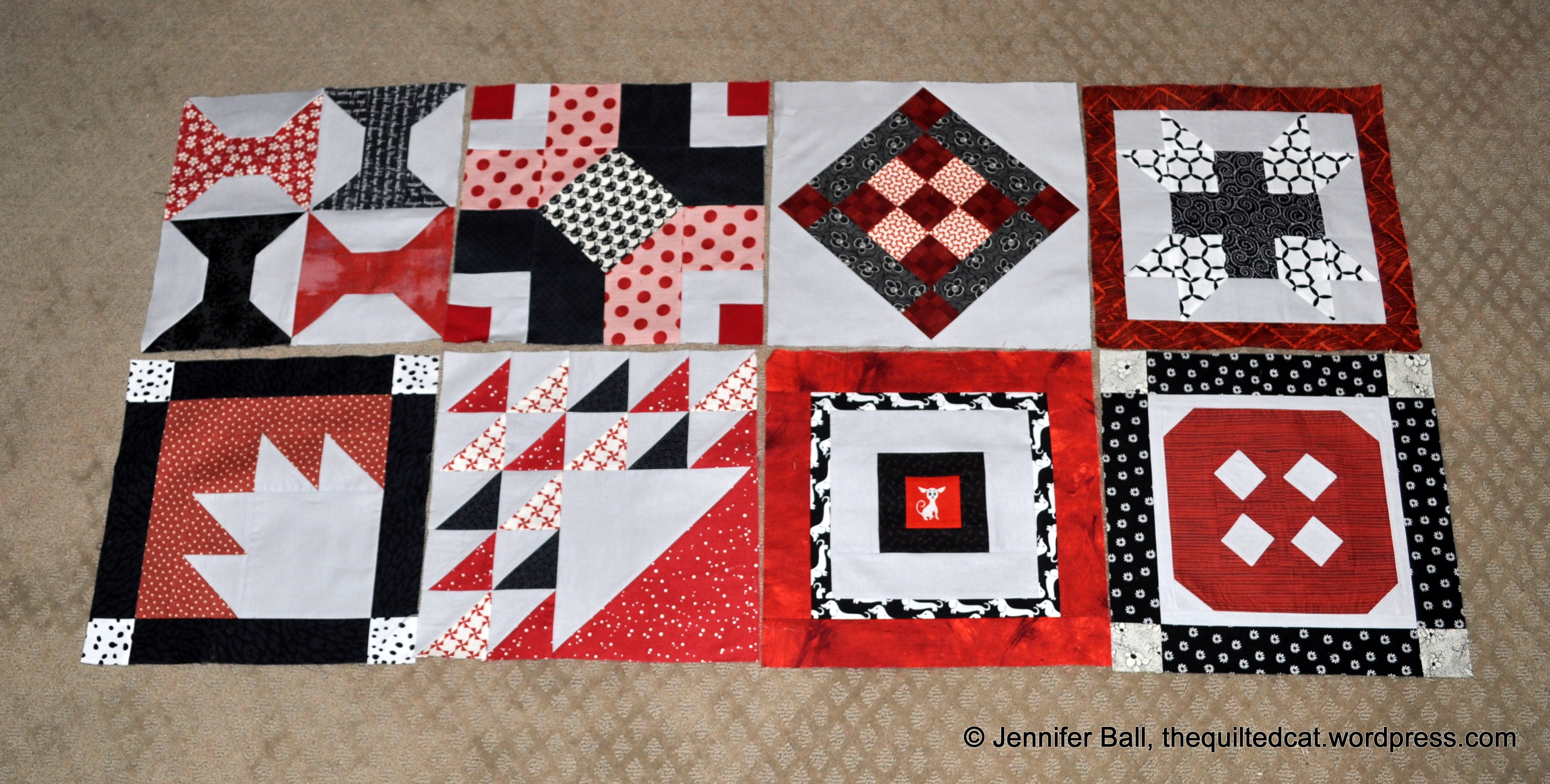
We have now made 8 blocks for the Aurifil BOM this year. Just 4 more blocks to go!

Aurifil BOM, Blocks 1-8

Aurifil BOM, Blocks 1-8

I’m really behind on my Vice Versa BOM. I need to finish up June, July and August – oops!

Hope you are enjoying some nice weather and getting some sewing time this summer.

Enjoy,
~Jennifer

Dot-to-Dot Quilting Class with Angela Walters + HQ Surprise!

Whew, it’s a warm and muggy evening here in the Pacific Northwest. I’m still on a bit of a quilting high after the Quilter’s Affair and Sisters Outdoor Quilt Show several weeks back.

I blogged earlier about my 2-day class with Ann Shaw and her wonderful Chicken Challenge class. (Hint: Keep reading for another picture of my chicken below.)

Today, I want to blog about the inspiring class that I took with my sister with the amazingly talented, Angela Walters.

We took Angela’s Dot-to-Dot longarm quilting class and got plenty of hands-on practice using a HandiQuilter Avante 18. Angela is a fun teacher with a talent for thread designs on the HQ! She made the designs look so easy, inviting, and accessible for everyone in the class.

Here’s a look at the 3 of us in class together:

Me, Angela Walters, my sis (Kimberly)

Me, Angela Walters, my sis (Kimberly)

The class had just the right amount of lecture, demonstration, and hands-on practice. The longarms were all set up in the Sisters High School gym and we did get downright cold at times, despite the heat outside. Although, I think I’d rather practice quilting in a room that is too cool rather than one that is too hot.

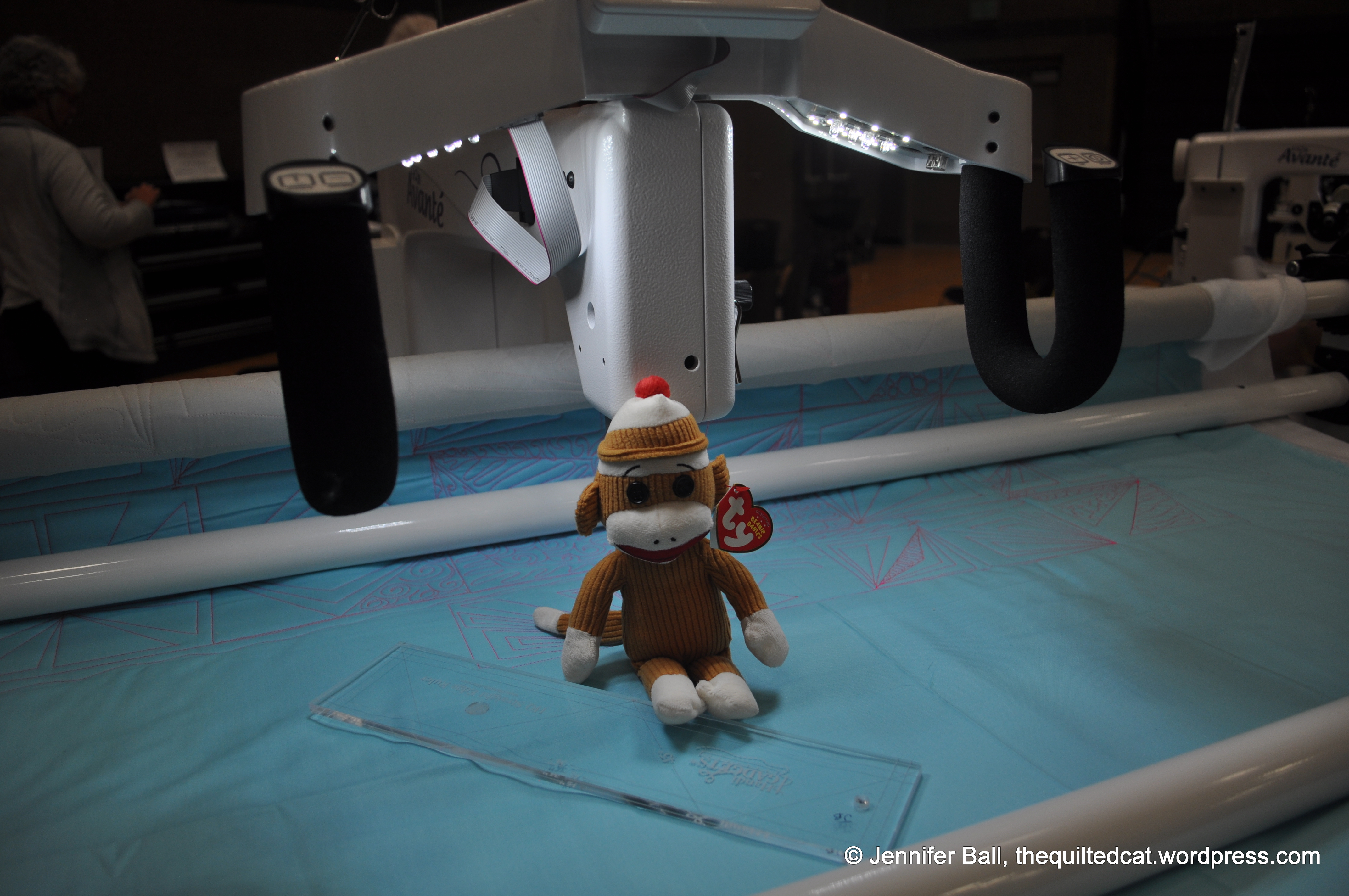
Here’s a look at some of our quilting with our sock monkey. Sock monkey followed us all around Sisters and even went hiking at Smith Rock one evening.

Quilting with Sock Monkey

Quilting with Sock Monkey

Up until this point, the only free-motion quilting that I had performed was on my little Bernina Activa or on my mom’s domestic machine that she has set up on a Hinterberg frame. My mom’s set up has worked pretty well, but we were limited to about 4 or 5 inches of actual quilting space.

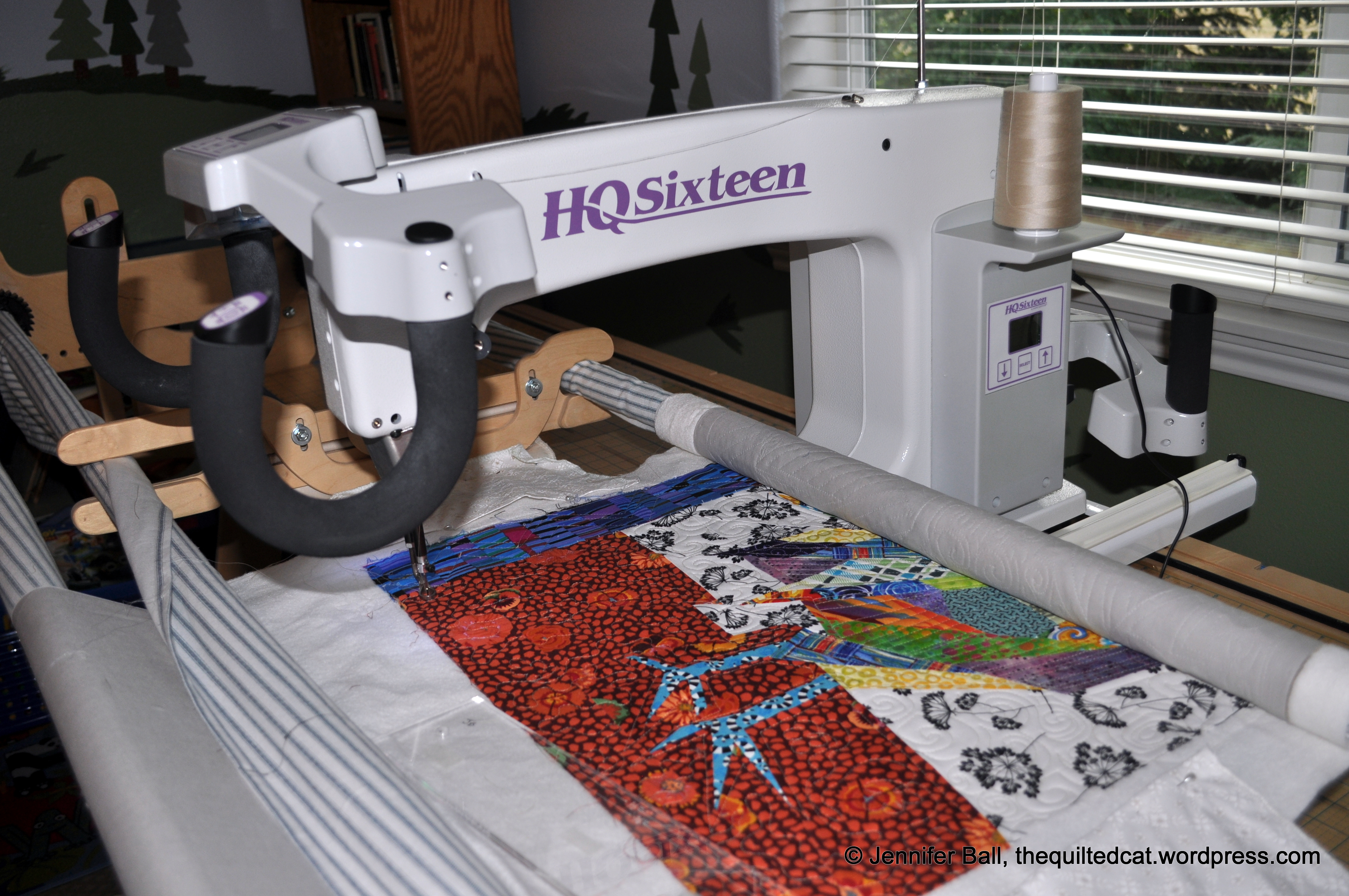
Here comes the surprise!! A local quilt shop called me to see if I would be interested in purchasing a used, stand-up Handi Quilter Sixteen with a queen-size wooden Grace frame. I wasn’t able to afford a new Avante (my dream), but this Sixteen was in my budget. I purchased it!!

I’ve been practicing on some solid fabrics, but gained so much confidence in Angela’s class that I decided to quilt up my first project this week – my chicken from Ann’s class.

Here’s a look at the chicken on the Handi Quilter Sixteen and Grace frame:

HQ Sixteen

HQ Sixteen

I did a combination of some swirls, meandering, and some ruler work to practice the techniques we learned in class. For the backing, I used a solid fabric so that I could see my quilting (with a Sisters Outdoor Quilt Show fabric panel and my label as a remembrance).

Here are some photos of the quilt back:

I am so happy to have this machine, and I can’t wait to get really proficient with it. One day, I may be able to trade up to the 18, but until then, little 16 and I will be great friends!

Thanks to both Angela and Ann for some amazing classes in Sisters!

Enjoy,
~Jennifer

Singer Featherweight Find

Hi everyone,

I hinted in earlier blog posts about my wonderful thrift store find. I found a Singer Featherweight 221-1 with its original case with key, instruction manual, presser feet and bobbins!! I do not have any antique sewing machines so I was so happy to finally get one.

She’s in pretty good condition with some of the decals partly rubbed off. The light turns on and she runs well. The case is in pretty good condition with some minor scuffing. I’ve signed up for a Singer Featherweight maintenance class at a local quilt shop in June so that I can learn how to care for her properly!

Based on the model number, she was manufactured on November 18, 1949. I really want to give her a name – any ideas?

Here are some pictures:

Singer Featheweight

Singer Featheweight

Singer Featherweight Side View

Singer Featherweight Side View

Singer Featherweight, Front View

Singer Featherweight, Front View

For now, I have her sitting on a side crafting table in my sewing room. I only have one other sewing machine – my trusty Bernina Activa – so it feels really good to have this beautiful machine to use on future quilty projects.

Have you made any good quilt or sewing related thrift store or garage sale finds?

Enjoy!
~Jennifer